🇮🇳 Delhi - Exploring the City
How I became a walking cash machine
I’m writing this a few days after leaving Delhi, and it might be the hardest place I’ve ever travelled to. Culturally enriching for sure, but it comes at a cost. I’ll explain.
I met another British traveller, Tom, at breakfast, who’s also just arrived and was keen to explore a few of the more popular places in Delhi. The hostel (Joey’s hostel) I was staying in has been amazing for meeting new people - the guests are friendly, the staff are fun, and the hostel was constantly organising tours and activities for the guests (none of which involve drinking until blackout with 18-year-olds on their gap yahs). I could have come to Delhi and only done what the hostel planned, and I’d have had an amazing time. I really lucked out here.
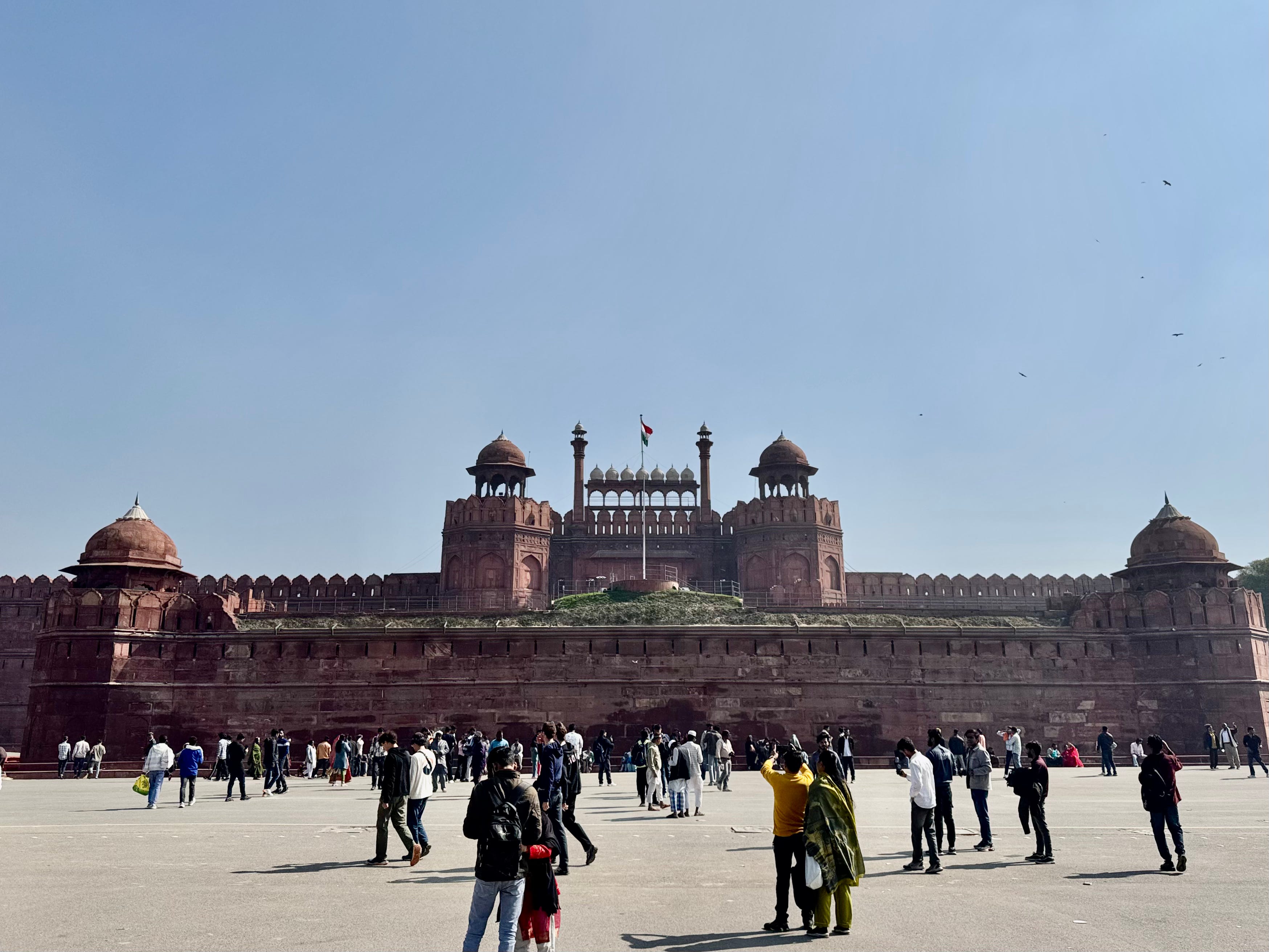
Our first stop was the Red Fort, which served as the main residence of emperors in the 17th century. After getting out of the Uber-booked tuk-tuk, we started getting harassed by tour guides and tuk-tuk drivers. I won’t dwell on this more, but it’s pretty persistent anywhere I’ve been in India. As a tourist, I seem to be seen as a walking cash machine, with the only effective way to lose harassers being not talking to them.
The Red Fort was a cool thing to visit, with a lot of the complex being free to roam around in. At the fort, we also started getting our first requests for photos with the locals. I’ve heard of this happening to tourists, but I didn’t think it would happen in a huge city that must get plenty of tourism. Anyway, this was a breath of fresh air as the locals were consistently excited to talk to us and telling us that we’re welcome in India, despite sometimes struggling with English. At this point, I must have featured in about 10 locals’ Instagram posts.
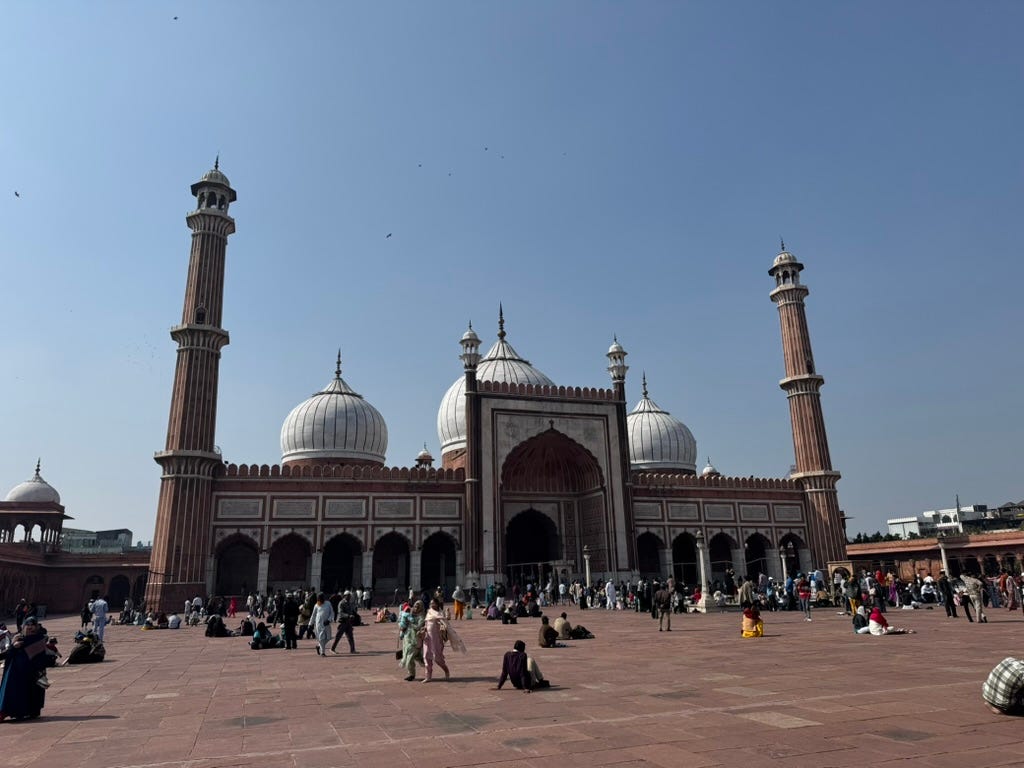
Leaving the Red Fort, we wandered through the markets of Chandi Chowk, which is one of the biggest markets in Delhi. The market was overwhelming, not helped by the apparent lack of the concept of personal space among the locals. We retreated to the sideroads, where barely any locals spoke English. I was amazed that you can buy anything you can think of at this market - there were some stalls, for example, selling only big calculators or only analogue wall clocks. I’m unsure how that can be profitable, but I’m sure they’re making it work. Our eventual destination was the Jama mosque - the largest mosque in India. On the way there, we witnessed a few locals screaming at each other, some others fighting, and someone getting interviewed on TV about a missing person. Pretty intense, but also felt like a microcosm for Delhi.
Visiting the mosque was a learning experience above all else. On the way in, you need to take off your shoes. A guy was guarding some shoes left outside, but we saw that some people were carrying theirs inside. Questioning the shoe guy about this, I was told that they can do that because they’re muslim. At risk of being disrespectful, we gave our shoes.
As we came in, one of the people from a desk set up right outside the mosque (which seemed quite official) started giving us a tour. We both realised we really messed up by giving our shoes in, as effectively they’ve now been held hostage while the guy was giving us the worst tour either of us has experienced - we could barely understand him, and he was telling us outright lies (e.g. that the marble used to build the mosque is from Dubai, which isn’t true). As predicted, once the “tour” was finished, he swiftly asked us for 500 rupees (£4) for the tour (I later found that’s the price of a professional guide for a long tour). We gave him a fraction of that, hoping to get him on our side when it comes to retrieving our shoes. After roaming around the mosque for a bit (which was stunning, although I dare say less impressive than ones in Uzbekistan), we left the mosque and grabbed our shoes. The shoe guy started asking for payment too, and we said that we already paid the tour guide. Luckily the tour guide was on our side and defused the situation. We really should have gotten a guide of some sort to visit Old Delhi.
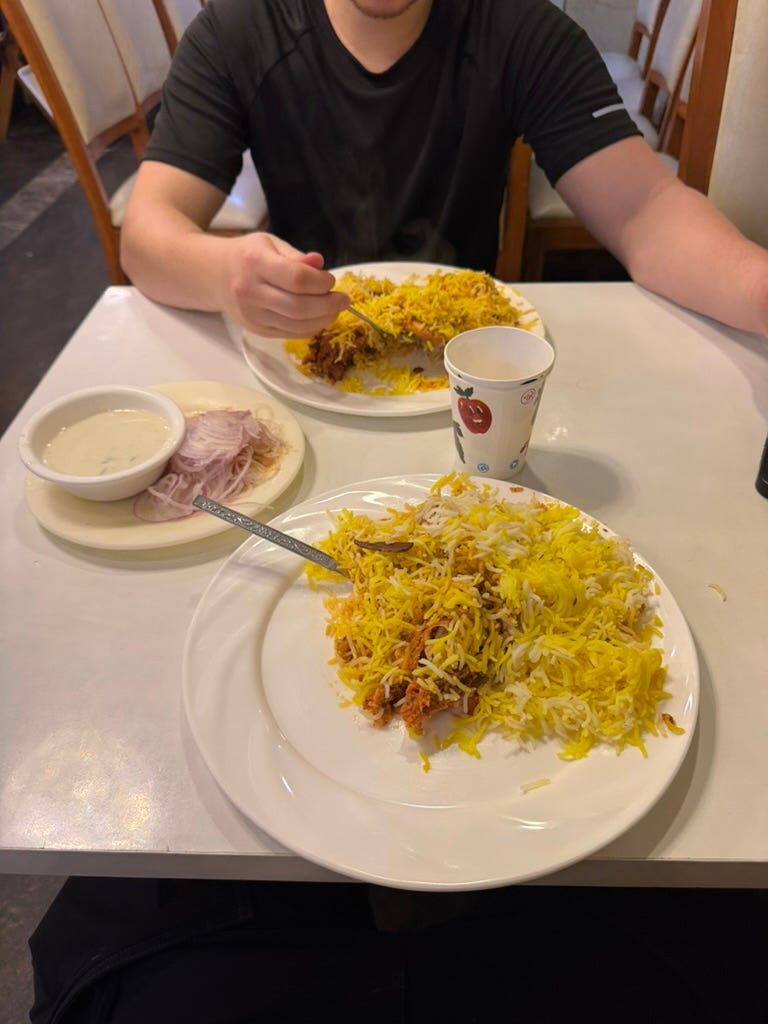
After the mosque palaver, we ran off to a nearby Biryani place, which just so happened to serve the best Biryani I’ve ever had. India seems to be quite good for restaurants that mostly have one dish on the menu, and they do that dish very well.
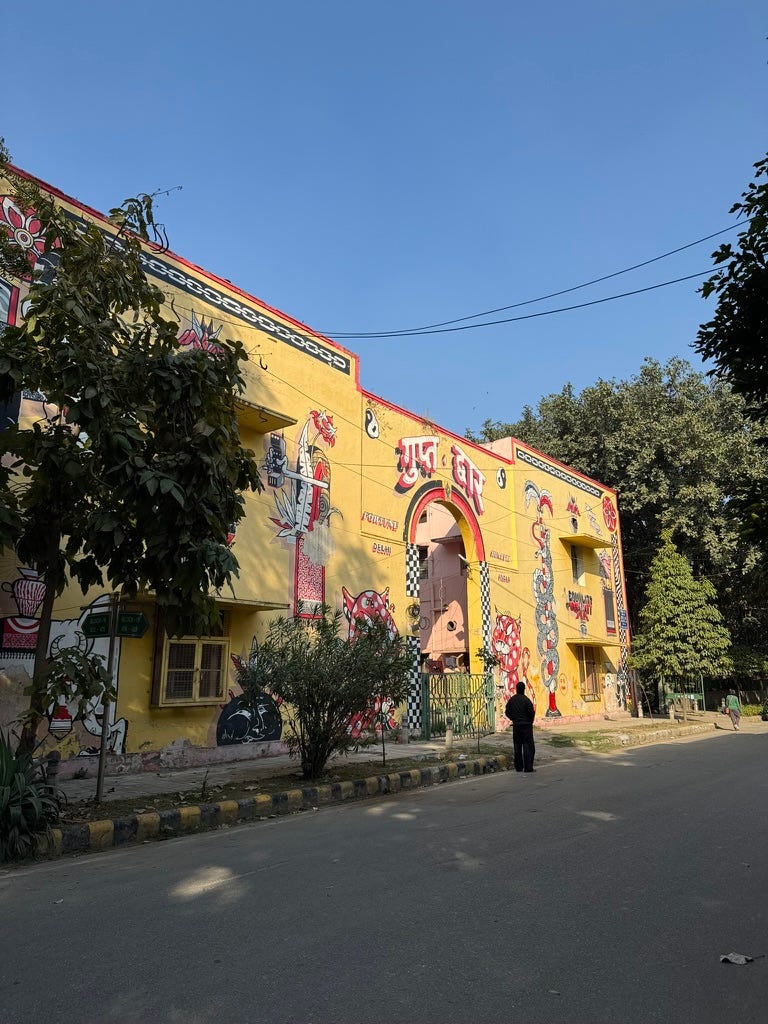
In the hopes of relaxing somewhere, we got a Tuk-Tuk to Lodhi Art District - an arty part of the city. On the way there, Tom captured what the roads look like here pretty well:
Wandering around the art district, we bumped into two locals recording a video, and they asked us if we wanted to answer a few questions on camera. Tom and Ben (another British guy from the hostel who just joined us) were keen to do it, so we agreed. We asked what the questions would be about, and the interviewers told us it wouldn’t be anything we had to prepare. That couldn’t be further from the truth - the questions were “What do you think of the ongoing art festival” (we didn’t know there was one), “How does British and Indian art differ” (none of us knew), “Is art political” (which we didn’t know how to answer at risk of getting our visas revoked). Nothing was posted about this on their Instagram or YouTube over the next few days, which I can only assume was because our answers were shit.
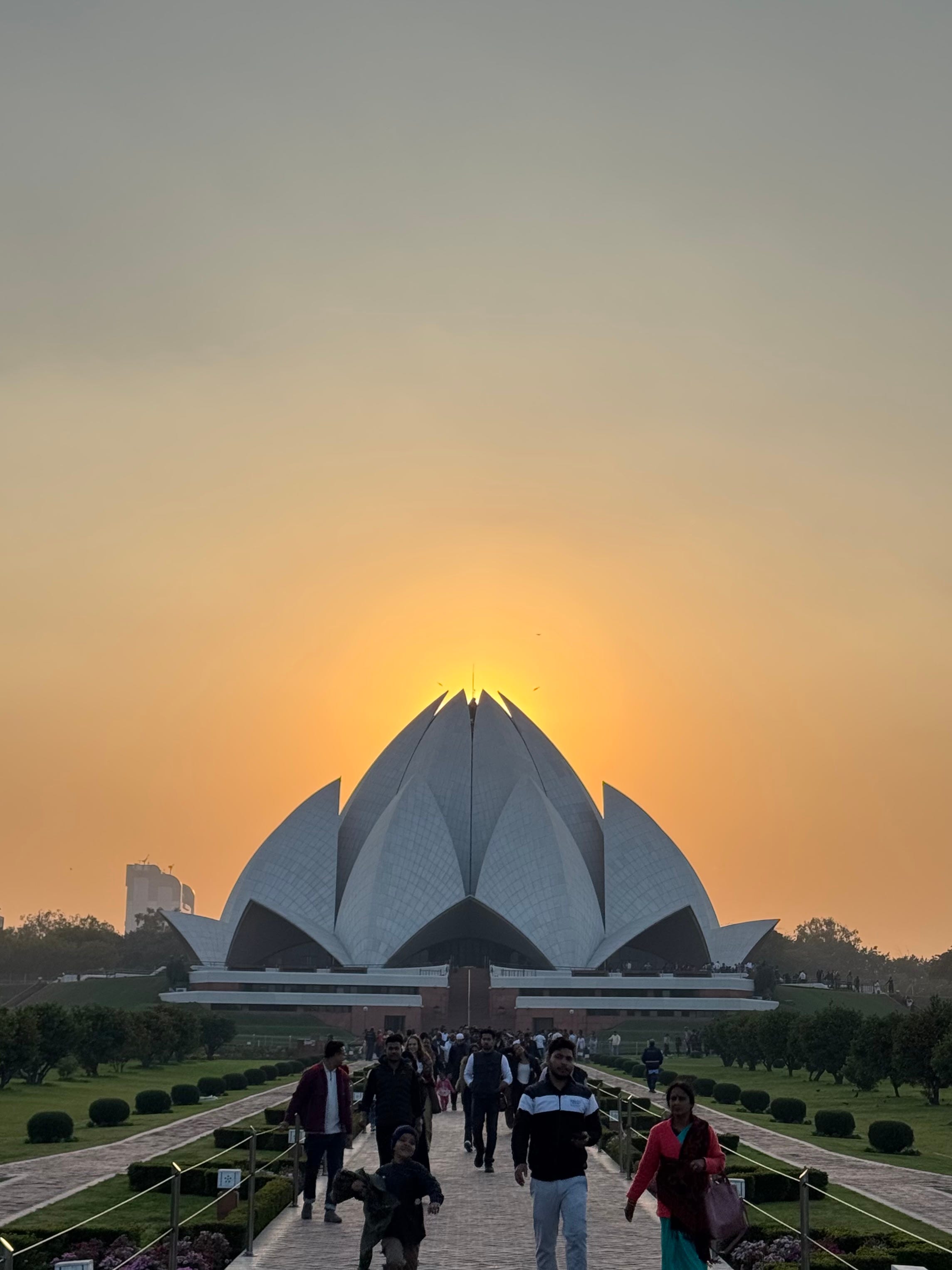
To finish the day, we went to the Lotus Temple. This was, so far, the most interesting temple I’ve been to, solely because it’s not a temple of any particular religion - I didn’t know such temples existed. Inside, we heard a reading from the Bible, the Quran, hindu scripture, and buddhist scripture. The building and gardens themselves were also quite something.
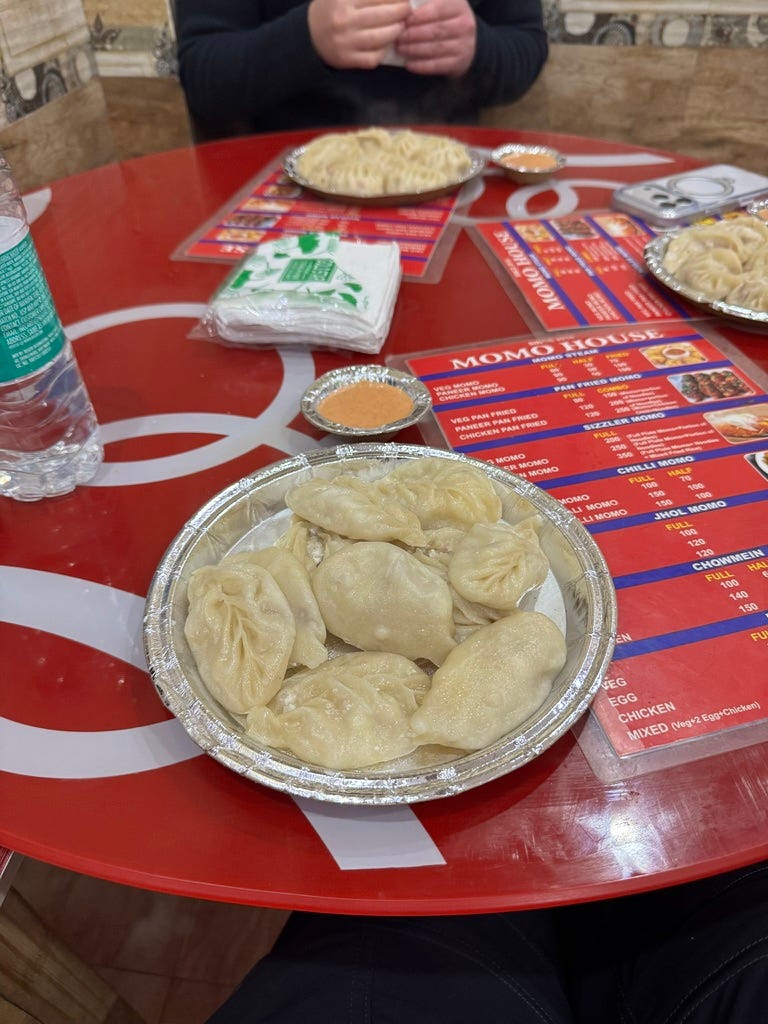
Finally, we finished the day by getting some incredible momos around the corner from our hostel. I’ve really been enjoying being able to get amazing food anywhere for not very much here.
Tom also told me that food and grocery delivery apps are good here, so I used one to get some snacks and fruit delivered and to avoid the harassment I’d get by leaving my hostel. It was a great recommendation - the prices seemed on par with what I could get at local shops, and delivery was free. In the UK, you get charged a hefty premium for the convenience of using such apps, but that doesn’t seem to be the case here. Funnily enough, the app sends an obscene amount of promotional notifications, and there’s no way to turn them off without also having notifications about your deliveries turned off. Just when I thought I was safe from the harassment in my dorm, it turns out the apps are doing it too.